HOPE: From Inequality to Opportunity | Series #3. Rethinking Welfare Architecture
Across India several states are expanding Direct Benefit Transfer (DBT) schemes to improve social security and inclusion. The intent is commendable.
However, support should ideally be based on poverty, vulnerability and genuine need — not blanket distribution.
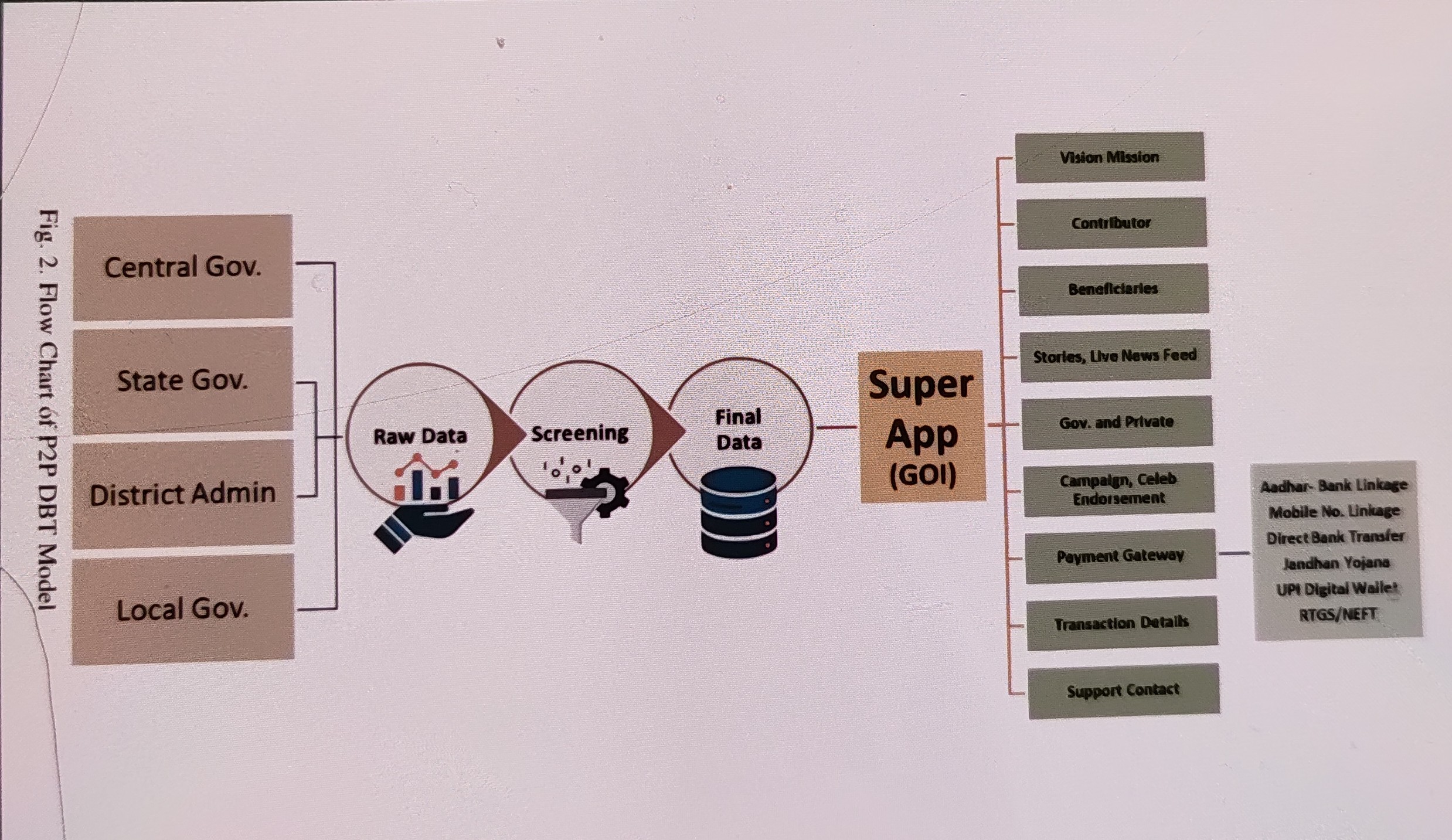
This is where P2P DBT — a complementary economic model I have conceptualised, becomes relevant:
●Data-verified identification of beneficiaries.
●Direct person-to-person micro support ie, a citizen-driven framework.
●Focused strictly on real need, based on income and vulnerability
●Transparent and accountable structure, ie rule based mechanism.
●Without any burden on government finances ie, no fiscal strain.
●Support without creating dependency ie providing a safety net but not creating a hammock.
●Government-backed verification integrated with fintech infrastructure, a public-private digital framework.
True inclusive growth is not about distributing to all, but about reaching those who truly need it.
Universal based cash transfers may sound inclusive, but they are not always the most efficient use of limited resources. Public funds are finite, and distributing benefits without clear income or vulnerability criteria can dilute impact.
The same resources could be directed toward productive investments — infrastructure, job creation, skill development, healthcare and education — which generate long term economic strength.
Alternatively, support could be more sharply targeted toward the genuinely poor and vulnerable, ensuring deeper and more meaningful assistance.
This is where a framework like P2P DBT can complement broader welfare policies by ensuring support reaches those in genuine need without creating dependency.
For those who would like to explore the P2P DBT model in greater details, the PDF link is provided here
https://pdf.ac/1A56yzYVe