
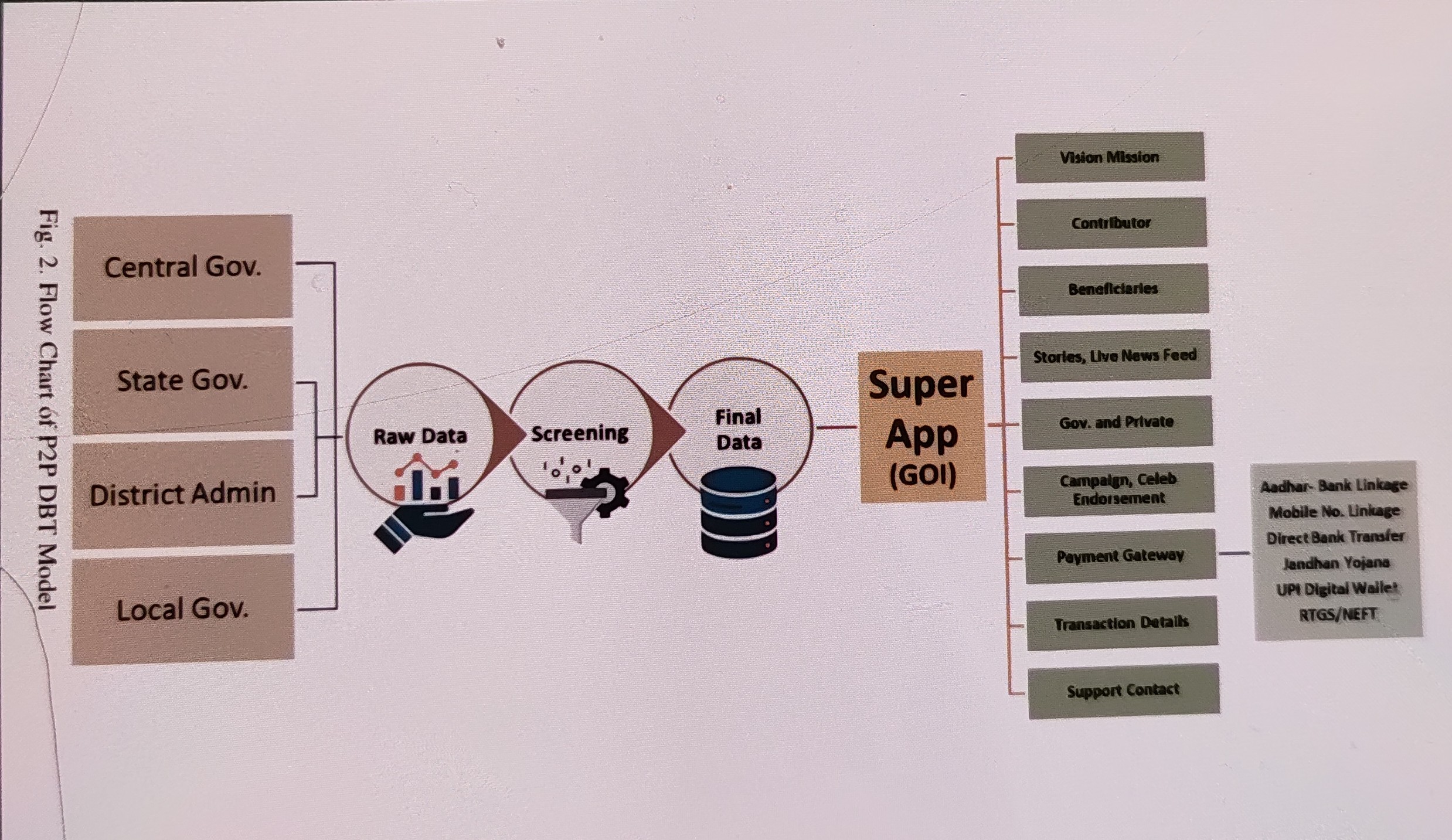
HOPE:From Inequality to Opportunity | Series #2 . P2P Model
Over the past several months, this blog has focused on personal finance, resulting in twenty write-ups exploring individual financial decision-making. Alongside this, a P2P framework has been outlined under a separate section of the blog.
In this post, I begin analysing the framework from different perspectives – how it could function in practice and how it may contribute to broader societal outcomes. Personal finance continues to remain a core focus of this space; this discussion simply widens the lens to a related societal dimension.
The section below is adapted from my recent LinkedIn post and expanded here for deeper analysis:
Background & Rationale of P2P Model
Despite sustained economic growth, poverty and inequality remain persistent challenges in India. Traditional welfare-led approaches, while essential, often place a continuous fiscal burden on governments and struggle with scalability, leakages, and long-term sustainability. At the same time a vast section of society is willing to contribute modestly toward social upliftment – provided the mechanism is transparent, trustworthy, and outcome-oriented.
The P2P model proposes a complementary, citizen-driven framework that works alongside existing government and institutional efforts to reduce poverty in a sustainable and dignified manner.
Core Idea of the P2P Model
The P2P model represents a new category of social protection – voluntary, digitally enabled, citizen-powered which complements existing welfare schemes and encourages shared national responsibility for reducing poverty and boosting economic activity.
The emphasis is on:
●Sustainability over one-time aid
●Participation over dependancy
●Transparency over discretion
Role of Government : Enabler, Not Funder
●A key strength of the model is that it does not impose any fiscal burden on the government.
●However, the government plays a crucial non-finance role by :
●Sharing verified socio-economic data (within existing legal and privacy framework)
●Assisting in beneficiary identification and validation
●Providing institutional legitimacy that builds public trust.
●Enabling convergence with existing welfare schemes where appropriate.
This partnership-driven approach ensures credibility, scale- readiness, and accountability without requiring additional budgetary allocation.
Role of the Private Sector : Technology & Infrastructure Partner
It directly addresses app development, smooth money transfer, contributor experience, and beneficiary discovery.
Technology-led organisations such as TCS, Infosys, or similar firms can support the model by developing and maintaining a secure, scalable digital application that serves as the operational backbone of the P2P framework.
When government institutions provide trust and data, and fintech companies deliver technology and efficiency, collective action becomes a powerful engine for inclusive growth and lasting social transformation. Together, they can script a credible success story in poverty eradication.